Syracuse University Engineering Professor Sees Future, Not Problems In MLB's 'Torpedo' Bats: 'Use Will Likely Increase'
Syracuse University's Prof. Alex Deyhim believes the torpedo bat surge across MLB this season could be the start of a greater innovation wave on the horizon

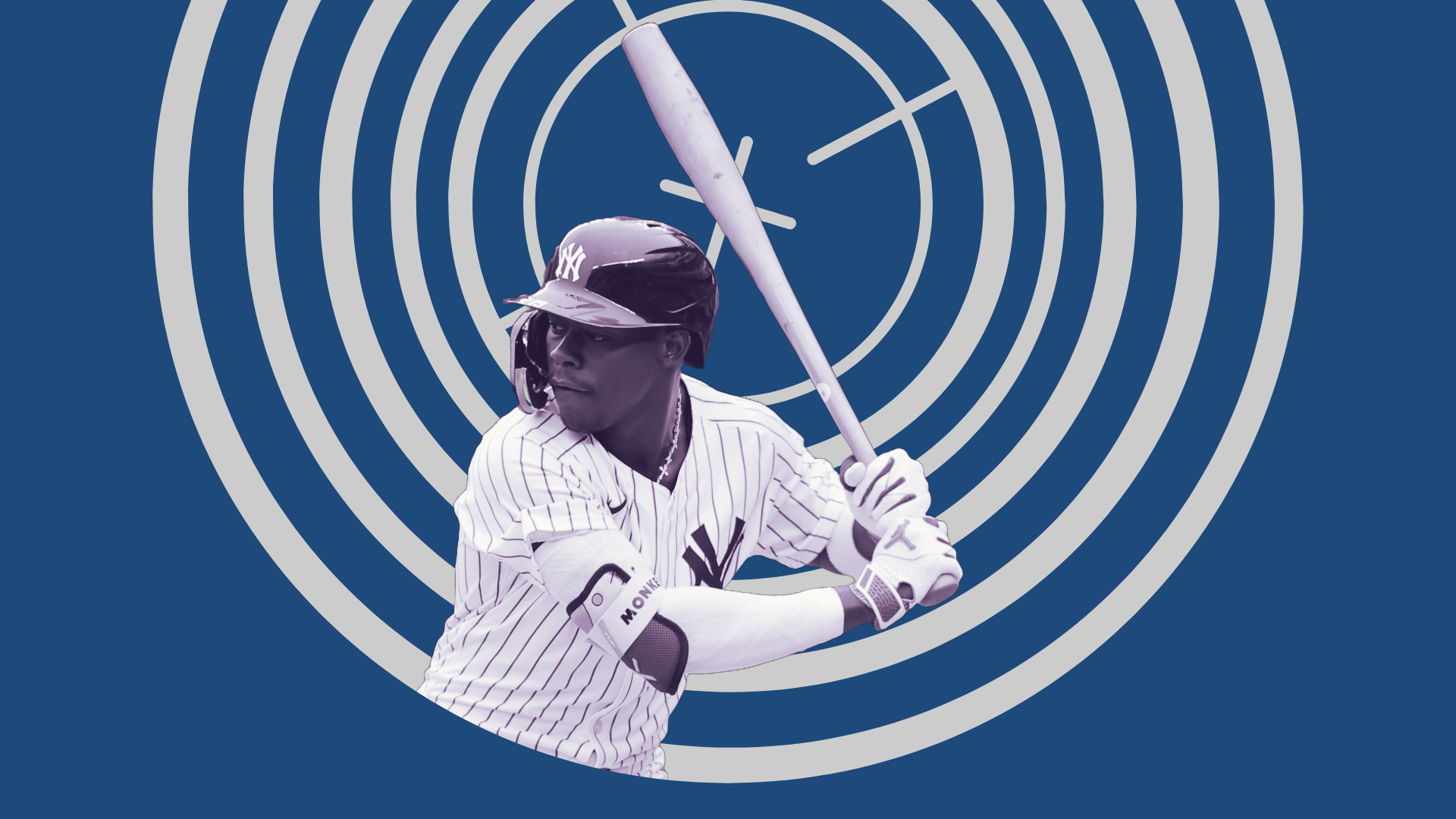
The New York Yankees became MLB’s biggest trendsetters in 2025 after putting torpedo bats on the map — in just three games. Mixed reviews, sportsmanship debates, and a broader discussion about analytics and its uprising soon followed the historic performance from Aaron Boone’s club.
New York launched a franchise-record nine home runs en route to a 20-9 beatdown of the Milwaukee Brewers on March 29. Immediately, the beard-accepting, American League pennant-defending Yankees caught flak for using bats vaguely reminiscent of the plastic jumbo bats found on Amazon.com for $11.99. The idea, not developed by Boone, Jazz Chisholm Jr., Anthony Volpe, Cody Bellinger or any of its other pioneers/defenders, spawned from a simple line of thinking.
Professor Alex Deyhim, of Syracuse University’s College of Engineering and Computer Science, provided a Torpedo Bats For Dummies explanation for why players and teams are so suddenly quick to adopt and commit to the concept.
“I believe the design focuses on optimizing mass distribution to improve swing speed and control,” Deyhim said in an email interview. “By shifting weight toward the hands, the bat reduces rotational inertia, allowing quicker swings and better plate coverage.”
In simpler terms, for the (many) non-experts without over three decades of engineering experience like Deyhim, the bat is tailor-designed to suit any given hitter, based on their “sweet spot” — where most contact is generated from a player’s swing. So that means lowering wood from the bat’s barrel to whatever area historically gives said hitter the best chance of powerful contact.
The biggest question (is it illegal?) has already been addressed by Major League Baseball commissioner Rob Manfred.
“I believe that issues like the torpedo bat and the debate around it demonstrate the fact that baseball still occupies a unique place in our culture because people get into a complete frenzy over something that's really nothing at the end of the day,” Manfred told The New York Times in a Q&A story published Sunday. “The bats comply with the rules.”
According to MLB Rule 3.02, a player’s bat “shall be a smooth, round stick not more than 2.61 inches in diameter at the thickest part and not more than 42 inches in length. The bat shall be one piece of solid wood.” It also clarifies that all “experimental” bats must receive league approval before being used in-game.
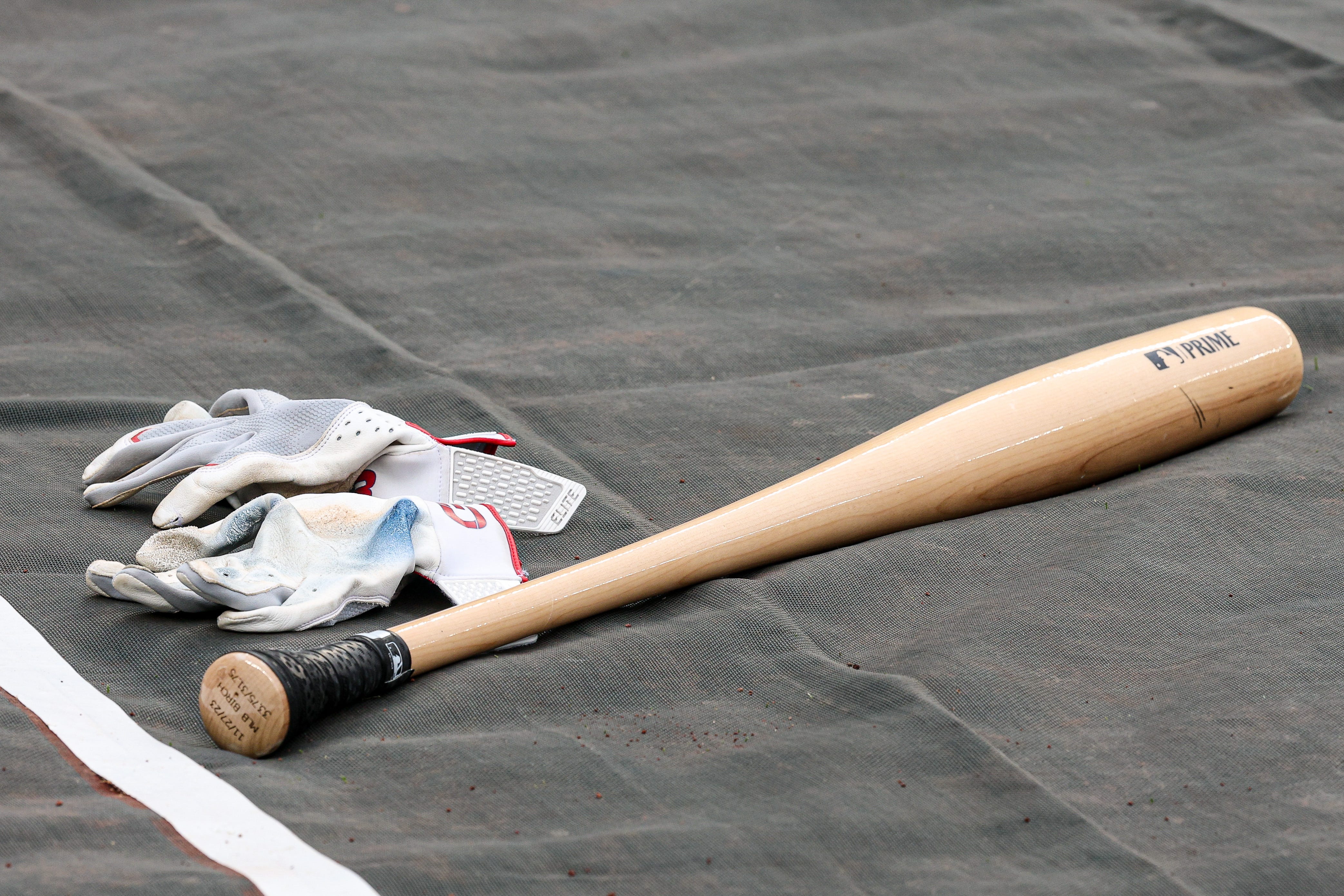
So while scrutiny and allegations of cheating the system have magnetically attached themselves to New York’s pinstripes, the Yankees aren’t doing anything wrong. Leaning into the organization’s analytical department — something teams have increasingly done in recent years — has benefited as many as five players in New York, all of whom are swinging a torpedo bat.
Deyhim firmly agrees with MLB’s stance on the matter.
“From a technical standpoint, the bat doesn’t add external energy — it simply redistributes internal mass to enhance efficiency,” he said. “It's no different than past advancements in sporting equipment like metal tennis rackets or composite hockey sticks. While it may offer a competitive edge in swing mechanics, it doesn't violate any core principles of fair play.”
The Yankees, in conjunction with their analytical team, conducted a study on Volpe’s swing to determine where his swing produced most of its contact. Their findings revealed most came from the bat’s label area, not the barrel. So, when spring training came around, Volpe began logging swings with the torpedo bat, which now has the 23-year-old slashing .297/.366/.703 with four home runs — only second to Aaron Judge for the team lead (6) — and 12 RBIs across nine games.
New York plated a combined 36 runs against the Brewers to sweep the three-game set. Volpe, Chisholm and Bellinger combined to crush six home runs throughout the series and introduced a nightmare to the Brewers.
Milwaukee relief pitcher Trevor Megill is an outspoken member of the anti-torpedo camp.
“I think it’s terrible,” Megill said, per the New York Post’s Dan Martin. “We’ll see what the data says. I’ve never seen anything like it before. I feel like it’s something used in slow-pitch softball. It’s genius: Put the mass all in one spot. It might be bush (league). It might not be. But it’s the Yankees, so they’ll let it slide.”
Even though New York has taken most of the heat for the torpedo bats, they haven’t been exclusively used by the Yankees.
Cincinnati Reds star Elly De La Cruz, too, gave the torpedo bats a chance during the team’s March 31 matchup with the Texas Rangers. The results? Equally jaw-dropping to New York’s nine round-trippers.
De La Cruz went 4-for-5 with two home runs, a career-high seven RBIs and 11 total bases to successfully prove the impact of adopting the torpedo bat.
Deyhim anticipates this will be the case moving forward across MLB.
“Adoption lag is common in sports tech,” Deyhim explained. “Players are creatures of habit, and it takes time for performance data and anecdotal success to overcome tradition. As more hitters see results, use will likely increase.”
We’re not even a month into the 2025 MLB season, and the results produced by the Yankees have, at least, triggered some curiosity among baseball’s brightest hitters. Boston Red Sox third baseman Alex Bregman also gave the torpedo bat a shot during the team’s recent three-game series against the Baltimore Orioles. Bregman abandoned it in the following game, however, the two-time World Series champion’s willingness to explore the analytically-driven innovation speaks volumes.
Players, like regular common folk, are responsive to results. When they see the Yankees’ assembly line around the bases against the Brewers, it catches not only the attention of those who oppose the torpedo bats, but also those curious about how it could impact their season-long production.
When asked if he also envisions the uprising of analytics infiltrating other professional sports leagues, Deyhim responded with zero doubt.
“Absolutely,” Deyhim said. “Engineering analysis and data-driven design are becoming central to performance optimization in all sports — from gear to biomechanics. This is just one visible example of a broader trend.”